
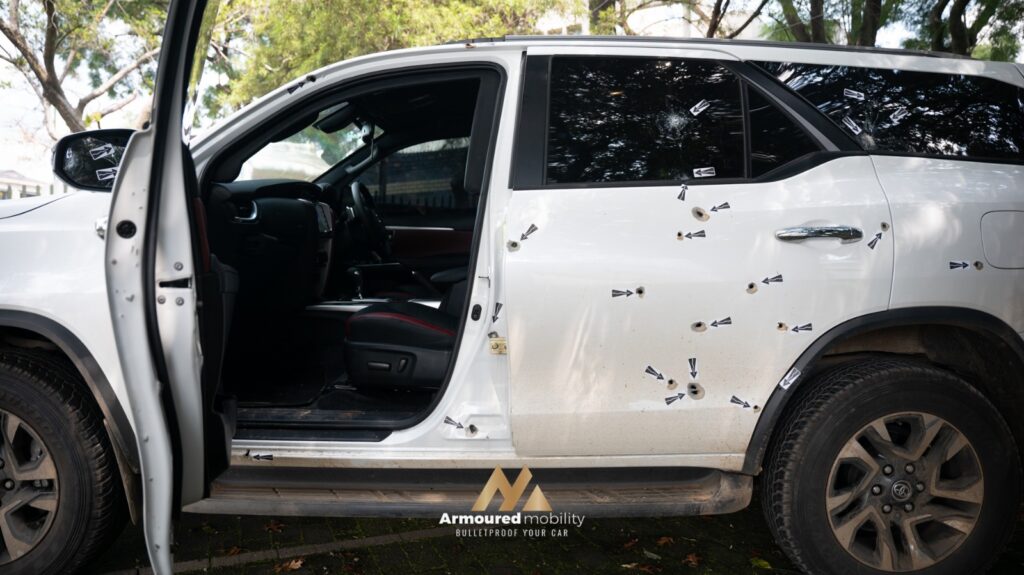
On Tuesday 17 February 2026, a motorist was shot and killed in Westville, near a shopping mall, in a shooting that has left many Durban residents shaken. Reports describe the incident as taking place at the corner of Menston Road and Buckingham Terrace, with the victim targeted while in his vehicle, and community structures appealing for witnesses and CCTV footage to assist the investigation.
Incidents like this are deeply distressing, and the first priority should always be respect for the people affected. At the same time, events of this nature force an uncomfortable but necessary conversation. For many South Africans, the most vulnerable moments are not at home or at work, but in transit, especially when entering or leaving public spaces such as malls, schools, office parks and residential nodes.
In 2026, personal security is increasingly about reducing exposure during everyday routines, not only responding after something has happened.
Why mall precincts can be high risk zones
Shopping malls and their surrounding road networks create predictable patterns. Vehicles slow down, stop frequently, and are often boxed in by other cars. Drivers may be distracted by navigation, parking searches, passengers, or the simple rush of everyday life. That combination of reduced mobility and divided attention is exactly what criminals look for.
The Westville incident has highlighted how quickly a routine outing can turn into a life threatening situation. Regardless of motive, what is clear is that the road environment around busy nodes can leave motorists with limited options if something unfolds in seconds.
The uncomfortable truth about time and distance
Most drivers assume that danger is something you can avoid with the right timing or route. While smart planning helps, it does not remove the risk entirely.
The issue is not only where you are, but what your vehicle allows you to do when you need to act quickly.
If your vehicle is vulnerable to forced entry, or if occupants are exposed through windows and door panels, then even a brief encounter can have serious consequences. In contrast, a properly armoured vehicle creates a protective buffer that can give you those crucial seconds to accelerate away, to reach a safer location, or to avoid a situation escalating.
What protection can realistically do in a real world incident
Armouring is not about invincibility. It is about risk reduction.
In South Africa, many vehicle related attacks involve handguns and close range intimidation, often at intersections or in slow moving traffic. That is why B4 protection has become such a practical option for many private clients and families.
According to Armoured Mobility’s own protection overview, B4 armour is designed to protect against most common handgun calibres, including 9mm, .40, .45 and .357, and is positioned as a level of protection suited to hijackings, smash and grab attempts, and even brick or rock attacks, with glass designed to help protect against fragmentation.
In other words, B4 focuses on the threats most motorists are statistically more likely to face day to day.
Higher protection levels exist for higher threat profiles, but for many people, the priority is to secure daily mobility without turning a vehicle into something heavy, awkward, or obviously specialised.
Why discreet armouring matters in suburbs like Westville
One of the reasons armoured vehicles used to feel like a niche product is that people imagined obvious, intimidating builds. Modern armouring is different. Discretion is central.
A discreet build aims to keep the vehicle looking and feeling like a normal premium SUV, sedan or bakkie. The point is not to advertise security, but to quietly improve survivability if something goes wrong.
Armoured Mobility’s build process is designed around choice and practicality, allowing clients to select a vehicle and a protection level, then tailor extras according to lifestyle and usage.
For Durban and KZN motorists, this discretion is important. Westville is a family oriented area with schools, offices, restaurants and shopping nodes. Most people want protection that fits into everyday life without drawing attention.
A vehicle is often the only “room” you cannot lock
People invest heavily in home security. Alarm systems, beams, access control, electric fencing and private response are normal. Yet many of the same households spend hours each week in the one place that is hardest to secure: their vehicle.
That is why incidents around malls resonate so strongly. They happen in public, during normal routines, and they remind people that a vehicle is not just transport. It is the space that carries your family, your work, and your freedom of movement.
When risk rises, the value of extending protection beyond the gate rises too. Armoured Mobility itself has framed this idea as taking safety beyond the home, particularly in the context of rising crime and road based threats.
Practical habits still matter, even with protection
Even the best protection should sit alongside smart habits. Without turning daily life into a drill, there are practical behaviours that reduce exposure around mall precincts and busy nodes:
- Keep a deliberate following distance in slow traffic where possible, so you have room to manoeuvre.
- Minimise time spent stationary with windows down, especially at intersections and entrances.
- Avoid sitting in the same spot for long periods while waiting for passengers.
- Be cautious of vehicles or individuals approaching from blind angles when exiting parking areas.
- Trust your instincts. If something feels wrong, leave the area and circle back.
Armouring does not replace awareness. It strengthens your margin of safety when awareness is not enough.
Why this matters now, not later
After a high profile incident, many people feel an initial surge of concern, then slowly return to normal routines. That is human. The problem is that risk does not wait for the perfect time to act.
What the Westville shooting shows is that serious violence can occur in familiar, everyday places.
For those who regularly travel through busy nodes in Durban and surrounding areas, it may be time to reassess what “normal” security looks like in 2026.
A subtle next step if you are rethinking your on road security
If the Westville incident has made you reflect on your own daily travel, the next step does not need to be dramatic. It can start with a conversation about real world risk, your routes, and what level of protection is appropriate.
B4 protection is often a sensible starting point because it is designed around common threats and everyday usability.
If you would like to explore discreet B4 or B6 options, Armoured Mobility offers a range of vehicles and an end to end build process, with support from its Durban presence for KZN clients.
A short consultation can help you understand what is possible for your current vehicle, or which platforms suit armouring best, without pressure and without overcomplicating the decision.