
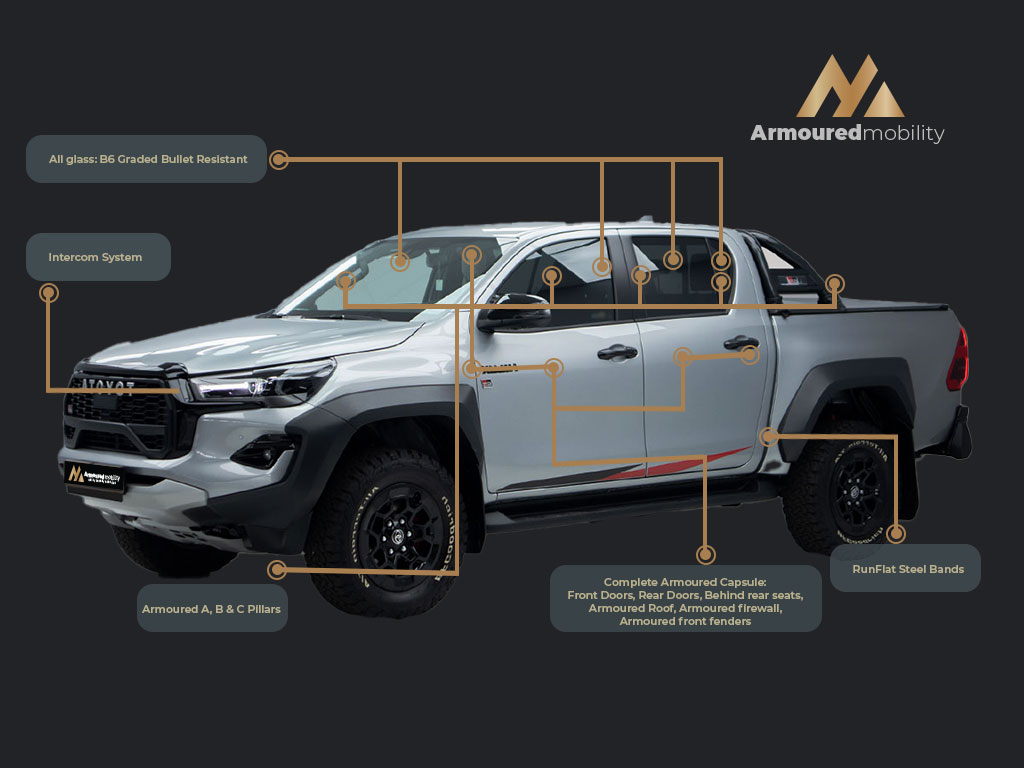
For decades, armoured vehicles were associated with a very specific image. They were seen as the preserve of politicians, diplomats and high profile executives moving between heavily secured locations. For most South Africans, armouring a vehicle felt distant, excessive and firmly in the realm of luxury.
That perception no longer reflects reality.
Today, armouring a vehicle is increasingly viewed as a practical decision made by ordinary families, professionals and business owners who spend time on the road and want to manage risk sensibly. The shift has been gradual, but it has become unmistakable. Armoured vehicles are no longer about status or spectacle. They are about safety, foresight and everyday peace of mind.
How the Meaning of Luxury Has Changed
Luxury used to be defined by comfort, aesthetics and performance. Leather seats, premium finishes and advanced technology were the markers of an upgraded lifestyle. While those elements still matter, the definition of luxury has evolved.
In modern South Africa, true luxury is peace of mind.
The ability to move freely without constant anxiety, to transport your family without fear and to go about your work without worrying about every traffic light or late night drive has become deeply valuable. Security has become an invisible but essential part of quality of life.
Armouring a vehicle delivers something that traditional luxury features cannot. It provides protection when circumstances turn unpredictable. In that sense, it has shifted from indulgence to necessity.
The Reality of Everyday Exposure
Most people do not consider themselves high risk. They follow familiar routes, drive at predictable times and live in areas they know well. Yet many vehicle related incidents happen during these exact routines.
Traffic congestion, urban sprawl and long commuting distances mean South Africans spend a significant portion of their lives in their vehicles. This extended exposure creates opportunity for crime, particularly in environments where movement is restricted.
Importantly, the majority of incidents are not sophisticated or targeted. They are opportunistic. Criminals look for vulnerability, hesitation and limited escape options. Vehicles at intersections, driveways and parking entrances provide exactly that.
Armouring addresses this vulnerability directly. It creates a physical barrier between occupants and threat, reducing the likelihood of harm even when avoidance is not possible.
Armouring Has Become More Accessible
One of the strongest arguments against armoured vehicles in the past was cost. High level armouring was expensive, heavy and impractical for daily use. This reinforced the idea that armoured vehicles were a luxury reserved for a small group.
That landscape has changed.
Modern armouring, particularly at civilian protection levels, is far more accessible. Lightweight materials, improved engineering and better integration techniques have reduced both cost and compromise. Vehicles can be armoured discreetly without drastically altering their appearance or driving characteristics.
Financing options and a broader range of suitable base vehicles have also opened the door for more people to consider armouring as part of their long term planning rather than a reactive purchase.
As a result, armoured mobility has moved closer to other protective investments such as secure housing, alarm systems and access control. It is no longer an outlier.
Practical Protection for Real World Threats
A common misconception is that armoured vehicles are designed for extreme scenarios that most people will never face. In reality, civilian armouring focuses on the most likely risks.
Protection against handgun fire, forced entry and aggressive smash and grab attacks addresses the majority of vehicle related threats in South Africa. This level of protection is not about confrontation. It is about creating a window of safety that allows occupants to escape or seek help.
The effectiveness of armouring lies in its ability to reduce the consequences of an incident, even if it cannot prevent the incident itself. That distinction is important. Security is rarely absolute. It is about layers and mitigation.
When combined with awareness, sensible driving habits and route planning, armouring becomes a powerful component of a broader personal security strategy.
Discretion Over Display
Another reason armoured vehicles were historically viewed as luxury items was their visibility. Older armoured conversions were often bulky, obvious and visually distinctive. This created the impression that they were special vehicles for special people.
Modern armouring takes a different approach. Discretion is prioritised. Vehicles are designed to look and feel as close to standard as possible. Interiors remain comfortable and familiar. Externally, there are few, if any, visible cues that a vehicle is armoured.
This matters because blending in reduces attention. It also makes armoured vehicles suitable for environments such as schools, residential estates and business premises where overt security measures may feel out of place.
Discretion allows protection to exist quietly in the background, supporting daily life rather than dominating it.
A Growing Range of Drivers Are Choosing Armour
The profile of armoured vehicle owners has broadened significantly.
Parents choose to armour vehicles to protect children during daily travel. Professionals in sales, consulting and leadership roles value the ability to move between meetings without concern. Business owners recognise that their safety is directly linked to the continuity of their operations.
Even individuals without obvious risk factors are increasingly considering armouring as a preventative measure. This shift reflects a more mature approach to security, where planning ahead is seen as responsible rather than reactive.
Much like insurance, the value of armouring is most evident when it is not needed. That quiet reliability is what makes it attractive.
Security as Part of a Balanced Lifestyle
Armouring a vehicle does not mean living in fear. In many cases, it has the opposite effect. By reducing anxiety around travel, it allows people to focus on their work, their families and their lives.
This balance is key. Security that disrupts daily life can become a burden. Security that integrates seamlessly becomes empowering.
As technology improves and armouring becomes more refined, it fits more naturally into modern lifestyles. It supports mobility rather than restricting it.
The idea that armoured vehicles are a luxury belongs to an earlier era. In today’s South Africa, where mobility and exposure are unavoidable, armouring is increasingly seen as a practical and considered choice.
It reflects an understanding of risk, a commitment to personal safety and a desire to protect what matters most. Far from being excessive, it is a rational response to the realities of modern life.
Armouring your vehicle is no longer about standing apart. It is about moving forward with confidence.